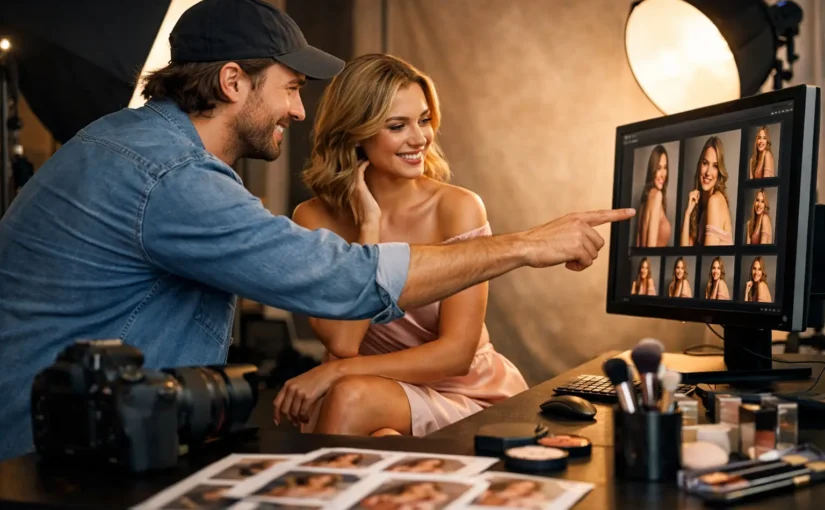
A boudoir photographer is not simply there to take beautiful photos. They create a private, intentional space where you can see yourself with fresh confidence. For many people, booking a session begins with a mix of excitement and nerves. You may love the idea of celebrating your body, a personal milestone, or a new chapter, while still wondering what to wear, how to pose, or whether you will feel comfortable on camera.
The right experience makes those questions feel manageable. Boudoir photography should never require you to arrive knowing how to pose or feeling fully camera-ready. It should be guided, respectful, customized, and centered on the version of yourself you want to celebrate.
What a Boudoir Photographer Actually Does
Great boudoir imagery is built long before the camera comes out. Your photographer helps establish the tone of the session, understand your comfort level, discuss the mood you want, and shape a plan around your style. Some clients want soft, romantic portraits. Others prefer bold editorial energy, playful glamour, athletic confidence, or a more understated intimate look. There is room for all of it.
The photographer’s role is to translate that vision into a session that feels natural. That includes choosing a fitting location, considering light and background, suggesting wardrobe combinations, and giving clear direction from beginning to end. You do not have to guess where your hands go, how to angle your body, or what expression to make. Small adjustments in posture, movement, and camera angle can make a major difference, and they are part of the guidance you are paying for.
Just as importantly, a professional understands that confidence does not look the same on everyone. The goal is not to turn you into someone else. It is to create polished images that feel powerful, personal, and recognizably yours.
Choosing a Boudoir Photographer You Can Trust
Style matters, but trust matters more. Before committing to a session, look for work that feels consistent in quality and respectful in presentation. Notice whether the images show variety in body types, expressions, wardrobe choices, and moods. A strong portfolio should demonstrate skill with light and posing while making the people in the photographs feel like individuals rather than copies of one another.
Communication is another useful signal. You should be able to ask direct questions about privacy, turnaround time, locations, retouching, payment, and what happens if you feel nervous on the day of your session. Clear answers make the process easier. If you are not sure how much skin you want to show, say so. If you have a feature you would like to emphasize or one you feel self-conscious about, that conversation can help shape the direction of the shoot.
A professional boudoir photographer will not pressure you into a look, pose, or level of intimacy that does not feel right. Your boundaries are part of the creative plan. The best images usually come when you feel seen, heard, and in control.
Ask About Privacy Before You Book
Boudoir sessions are personal, so image privacy deserves a straightforward conversation. Ask how galleries are delivered, who has access to your images, whether photographs may be shared publicly, and how permission is handled. Do not assume that portfolio use is automatic or that privacy requests are difficult to accommodate.
You can also discuss the level of discretion you want around the session itself. Some clients prefer a private studio setting, while others feel most at ease in a carefully chosen hotel, rental, or home environment. The best option depends on the mood you want, your budget, and how much privacy the location can realistically provide.
Preparing Without Trying to Be Perfect
Preparation should help you feel relaxed, not create another impossible standard. Start by choosing pieces that make you feel good when you put them on. Lingerie can be beautiful, but it is not the only option. An oversized button-down, favorite jeans, a robe, a blazer, athletic wear, a jersey, or an heirloom piece can all create a meaningful visual story.
Fit matters more than a label or trend. Bring options when possible, including a few different silhouettes and colors. Try them on ahead of time so you can move comfortably. Avoid leaving tight elastic or straps on immediately before the session if you do not want temporary marks on your skin. If hair and makeup are part of your plan, schedule enough time so you do not arrive rushed.
Sleep, hydration, and a meal beforehand can support your energy, but this is not a fitness test or a reason to change your body. You do not need to earn a boudoir session by reaching a certain number on a scale, getting a spray tan, or becoming more confident first. The session can be part of how you honor yourself right now.
Bring Meaning Into the Details
The most memorable sessions often include something personal. A letter, a piece of jewelry, a uniform, a jacket, flowers, heels you love, or an item connected to a partner or life milestone can add depth without making the images feel overly staged. If your photos are a gift, that meaning can be woven in subtly. If they are entirely for you, the same principle applies: choose details that make the experience feel like your own.
What Happens During the Session
The first few minutes are usually about settling in. You may review your wardrobe, talk through the plan, and start with simple poses that help you get comfortable. A skilled photographer will build momentum rather than expecting instant confidence. Often, clients who feel awkward at the beginning are surprised by how quickly the session becomes fun once they receive clear direction.
Expect specific, encouraging prompts. You may be asked to shift a shoulder, lengthen through your posture, soften your hands, look toward a window, or move slowly through a pose. These directions are not criticism. They are the small refinements that create flattering, intentional photographs.
Movement can be especially helpful if holding a pose feels unnatural. Sitting, walking, adjusting a sleeve, playing with fabric, or turning gradually can create images with genuine expression. Some shots may feel more polished and posed, while others capture a quiet in-between moment. Both can belong in a strong final gallery.
It is also okay to pause. Need a water break? Take one. Want to skip a particular look? Skip it. Feeling more confident than expected and ready to try something bolder? Say that, too. The session should have structure, but it should also make room for your comfort and your changing energy.
The Difference Professional Direction Makes
Phone photos and casual snapshots have their place, but boudoir photography benefits from a more thoughtful approach. Professional lighting can create softness, dimension, drama, or a clean editorial finish. Intentional composition keeps the focus on your expression and presence. Experienced posing direction helps shape images that feel flattering without looking stiff or overly edited.
Retouching is part of the final polish, but it should support the image rather than erase the person in it. Preferences vary. Some people want temporary blemishes softened; others want minimal editing and visible texture. Discussing expectations ahead of time helps ensure the finished images feel elevated while still feeling honest.
This balance is especially valuable for a first session. You deserve images that look refined, yet do not ask you to disappear behind unrealistic perfection.
Make the Experience About More Than the Photos
A boudoir session can mark a birthday, a wedding season, a fitness goal, a recovery journey, a career change, a divorce, or no occasion at all. Sometimes the reason is simply that you are ready to take up space in your own story. That is enough.
At Aaron Wilson Photography, the focus is on creating a guided, personalized portrait experience where you can arrive as you are and leave feeling celebrated. From wardrobe conversation through final image delivery, thoughtful support makes room for both the nerves and the excitement.
Choose a photographer whose work you admire, whose process feels clear, and whose presence helps you relax. When the experience is built around your comfort, the confidence in the final images has somewhere real to come from.