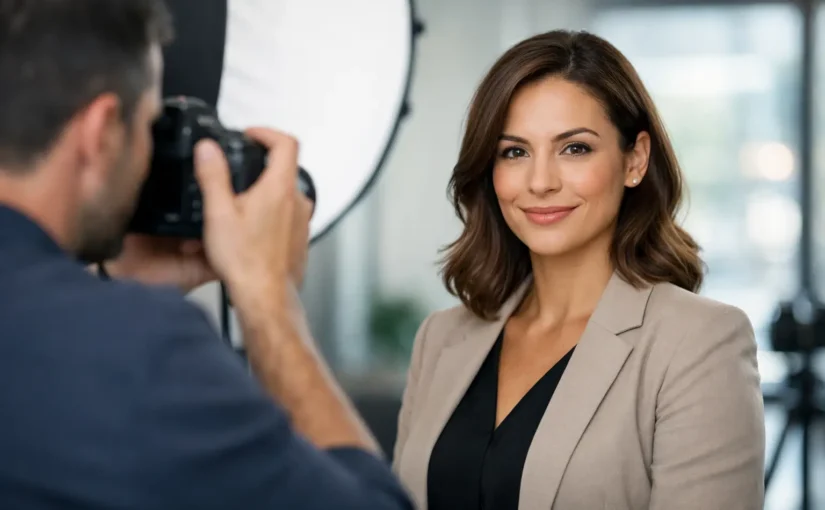
A strong headshot is rarely about having a naturally photogenic face. It is about knowing how to pose for headshots in a way that lets your personality come through without feeling stiff, overly serious, or unlike yourself. The best images usually come from small adjustments: a relaxed shoulder, a gentle shift of weight, a genuine expression, and guidance that keeps you focused on the moment instead of the camera.
Whether you need an updated professional portrait, a personal-brand image, a graduation photo, or a polished portrait to celebrate a new chapter, you do not need to arrive with a catalog of poses. You only need a few reliable foundations and a photographer who knows how to direct you clearly.
Start With Posture, Not a Smile
Most people try to fix their expression first. In reality, posture sets the tone of the entire photo before your face does. Stand tall through your spine, then let your shoulders settle down and back. The goal is open, comfortable posture, not a military stance.
Avoid facing the camera perfectly straight with both shoulders squared unless you want a very formal, direct look. Turning your body slightly to one side creates shape and dimension. From there, rotate your face back toward the lens. This simple position is flattering for nearly everyone because it gives the portrait depth while keeping your eyes connected to the viewer.
Think of length rather than tension. Lengthen through the top of your head, soften your knees, and breathe out slowly. If your body feels locked, it will show in your jaw, hands, and eyes.
How to Pose for Headshots Without Looking Posed
The difference between polished and awkward is usually movement. Rather than finding one perfect position and freezing there, make small changes between frames. Shift your weight from one foot to the other. Turn your chin a fraction. Let one shoulder come slightly forward, then relax it back.
These micro-adjustments give your photographer options and help you settle into a natural rhythm. A guided session should feel more like a conversation than a test. You may be asked to look just past the lens, glance down briefly, or think of someone who makes you laugh before looking back up. Those prompts create expressions that feel alive instead of performed.
A useful starting position is to place more weight on your back foot while keeping your front knee soft. This prevents the rigid, flat stance that can happen when both feet are planted evenly. If you are seated, sit toward the front edge of the chair, keep your back long, and angle your body slightly rather than sinking into the seat.
Bring Your Chin Forward, Then Slightly Down
This direction can feel strange at first, but it is one of the most effective headshot adjustments. Gently extend your face forward an inch or two, as if your forehead is moving toward the camera, then lower your chin just slightly. It defines the jawline and keeps the face from appearing compressed.
The key is subtlety. Pushing too far can look unnatural, while dropping the chin too much can make you appear withdrawn. Your photographer will watch the angle and make small corrections, so you never have to guess whether you are overdoing it.
Let Your Eyes Do Some of the Work
A headshot is an introduction. Your eyes should feel present, whether the desired impression is warm, capable, creative, athletic, calm, or bold. Instead of trying to make your eyes “look bigger,” focus on an emotion or a person you would be happy to see.
For a professional headshot, think approachable confidence. For a fitness portrait or personal-brand session, you may want more intensity and focus. For a graduation portrait, joy and pride may be the right direction. There is no single expression that works for every purpose, which is why your session should reflect the way you want to be seen.
Avoid opening your eyes wider than normal. That can create a startled look. A relaxed gaze, paired with a slight lift in the cheeks, is often much more compelling.
Use Your Shoulders and Hands With Intention
Even in a close crop, shoulders tell a story. A shoulder slightly closer to the camera can create a confident, editorial feel. Keeping the far shoulder relaxed can make the pose softer and more open. If you tend to carry tension in your upper body, roll your shoulders once before each new setup and let them fall naturally.
Hands may not appear in every headshot, but when they do, they should have a purpose. A light touch at the jawline, a hand resting near the collarbone, or arms gently folded can add personality. The goal is never to hide behind your hands or press them tightly against your face. Keep fingers loose and separated enough to avoid a clenched appearance.
For business portraits, folded arms can communicate confidence, but the pose works best when your shoulders remain relaxed and your expression stays welcoming. If folded arms make you feel guarded, use a hand in a pocket, hold a jacket lapel, or simply let your arms rest naturally outside the frame.
Choose Expression Based on What the Headshot Needs to Do
Not every headshot needs a broad smile. A great image should match its purpose and the person in it. An entrepreneur may need a clean, trustworthy portrait for a website and speaking profile. A creative professional may want a more expressive image that feels distinct. An athlete may prefer a focused, powerful look. Someone celebrating a milestone may want something bright, relaxed, and personal.
Plan for variety during your session. Start with a gentle closed-mouth smile, then try a larger smile, a neutral confident expression, and a softer look. Often, the most natural frame happens between the poses, right after you laugh or reset.
If you are worried about a forced smile, do not hold it for too long. Smile, release, breathe, and bring it back. A real smile has movement in the cheeks and eyes. It does not need to be perfect to look good.
Wear Clothing That Supports the Pose
Your outfit affects how freely you move and how confident you feel. Choose clothing that fits well at the shoulders, chest, and neckline. If you are constantly pulling at a sleeve, adjusting a collar, or worrying about a tight waistband, that distraction can show up in your posture.
Solid colors and simple textures tend to photograph beautifully for classic headshots. They keep the attention on your expression. That said, personal branding portraits can benefit from color, layers, or an accessory that fits your style. The right choice depends on where the photo will appear and what you want it to communicate.
Bring a second option when possible. A blazer, a different top, or a change in neckline can give your final gallery more range without requiring a completely different session. Most importantly, wear something that feels like a polished version of you, not a costume you think a headshot requires.
Trust Direction and Give Yourself Time
The first few minutes in front of the camera can feel unfamiliar, even for confident people. That is normal. A professional headshot session should include clear direction on where to stand, what to do with your hands, how to angle your face, and when to reset. You are not expected to know every detail on your own.
At Aaron Wilson Photography, the experience is designed to feel guided and personal, so you can focus less on whether you are posing correctly and more on showing up as yourself. Good direction is not about changing who you are. It is about helping your best presence translate on camera.
Before your session, give yourself a little extra time to arrive, settle in, and avoid rushing from another commitment. Drink water, choose clothes you can move in, and skip the pressure to get every frame right. The camera responds well to ease.
Your headshot does not have to make you look like someone else to make an impact. A slight turn, a relaxed breath, and an expression that feels true to you can create the kind of portrait people remember for the right reasons.