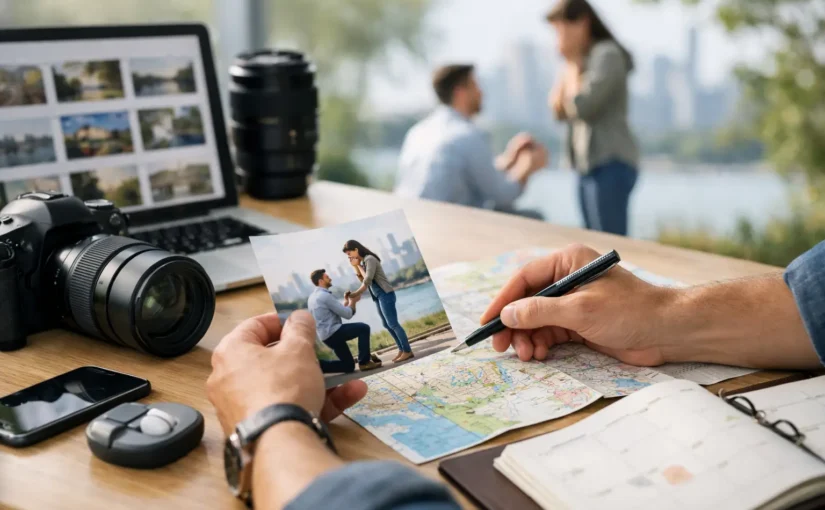
The best proposals happen in a few fast, emotional seconds: the pause before you get down on one knee, the look of recognition, the laugh, the tears, and the yes. A surprise proposal photographer is there to preserve those reactions without turning the moment into a production. That takes more than showing up with a camera. It takes a thoughtful plan that protects the surprise while giving you images that feel as personal as the commitment you are making.
Why a surprise proposal needs a plan
A proposal can be spontaneous in spirit without being unplanned. In fact, a little preparation gives you more freedom to be present once the moment arrives. Your photographer can help you choose a location with the right mood, consider lighting and crowd levels, and create a simple communication plan that does not raise suspicion.
The goal is never to make your partner perform for the camera. It is to create the conditions for a genuine reaction. Whether you are proposing during a waterfront walk, at a scenic overlook, in a favorite neighborhood spot, or during a private picnic, the plan should fit your relationship rather than someone else’s idea of a perfect proposal.
For couples planning in the Bay Area or Sacramento, timing can make a noticeable difference. A popular public location may be quiet in the morning but crowded near sunset. A photographer who understands how to work within an active setting can help you weigh the trade-off between dramatic golden-hour light and the privacy that comes with an earlier session.
What a surprise proposal photographer actually does
A professional proposal photographer is part visual storyteller, part calm behind-the-scenes planner. Before the day, you will usually talk through the proposal location, where you will approach from, which direction your partner will face, and the signal that tells the photographer the moment is about to happen.
That signal can be as simple as adjusting your jacket, sending a short text, or stopping at a planned viewpoint. The photographer will already be in position, looking like another visitor or keeping enough distance to remain unnoticed. You should not have to search for the camera or wonder whether the moment was captured.
Positioning matters because proposals are not repeatable. Your photographer will consider the background, available light, and where both of you will stand. Small adjustments can make a big difference. Facing away from harsh sunlight, avoiding a crowded trash bin or parked cars in the background, and leaving room for the setting to show up in the frame all help create polished images without making the plan feel overly staged.
Just as important, your photographer should know when to stay back. The strongest images often come from the in-between moments: your partner covering their face, the hug that lasts longer than expected, friends appearing from nearby, or both of you taking a breath after the question has been answered.
Choosing a location that means something
A beautiful location is helpful, but meaning will always photograph better than scenery alone. Start with places that have a connection to your story. It might be the site of an early date, the trail you take every weekend, a restaurant district where you spend time together, or a quiet garden that gives you room to focus on each other.
Then think practically. Ask whether the location requires a permit, has restricted access, or gets especially busy at certain times. If you are bringing flowers, a sign, candles, or a musician, confirm what is allowed before finalizing your plans. A proposal setup should add to the experience, not create stress on the day.
Privacy is another personal decision. Some people love the energy of a public proposal, especially if friends and family can be close by. Others want the question itself to be just the two of you, followed by a celebration later. Neither choice is more romantic. The right one is the one that makes your partner feel seen and comfortable.
Build a realistic timeline
Try not to schedule the proposal so tightly that one traffic delay changes everything. Give yourself extra time for parking, walking to the location, and settling your nerves. If the proposal is set for sunset, arrive earlier than you think you need to. The best light usually comes before the sun reaches the horizon, not after.
If you are planning a dinner reservation or gathering afterward, leave enough room for the post-proposal portrait time. Even 15 to 30 minutes after the yes can create a beautiful mini engagement session while the emotion is still fresh. You will have a chance to show the ring, take in the setting, and make a few intentional portraits without interrupting the proposal itself.
How to keep the surprise believable
The most common concern is simple: how do you get your partner dressed and ready without giving anything away? A believable reason is usually more effective than an elaborate story. Plan a date night, a birthday outing, a casual walk somewhere meaningful, or a visit with friends. Choose a reason that sounds like something you would genuinely do together.
If your partner enjoys getting dressed up, build that into the plan naturally. If they prefer a relaxed style, do not force a formal look just for photos. The best images reflect who you are. Coordinated colors can look great, but matching perfectly is not necessary. Aim for outfits that feel comfortable, photograph well, and make both of you feel confident.
Keep the number of people who know the plan small. The more people involved, the greater the chance that someone slips up or changes the schedule. If family and friends will join afterward, assign one reliable person to coordinate their arrival so you can stay focused on your partner.
Questions to ask before booking
Your connection with the photographer matters. You are trusting someone with a once-in-a-lifetime moment, so look for clear communication, a calm presence, and a style that feels aligned with the way you want to remember the day.
Ask how they handle crowded locations, what happens if weather changes, and how they prefer to receive your signal. You can also ask about image delivery timing, whether they can photograph a short portrait session after the proposal, and how they help if your original location becomes unavailable.
It is worth discussing backup plans directly. Outdoor proposals can be affected by rain, wind, heavy traffic, unexpected construction, or a location that is far busier than expected. A strong plan includes a nearby alternative or a simple adjustment that still protects the experience. Flexibility is not a sign that the plan is weak. It is what keeps a meaningful moment from being derailed by details outside your control.
After the yes: give yourselves a minute
When the question has been asked, do not feel pressured to move immediately into posed photos. Take the hug. Look at the ring. Say what you want to say. Let the moment land. A photographer can continue documenting from a respectful distance while giving you space to be fully with each other.
Afterward, a little guidance can help you transition into portraits without feeling awkward. You do not need modeling experience. Simple prompts, easy direction, and a relaxed pace can create images that feel polished while still looking like you. This is especially valuable if the proposal is your first professional photo experience together.
A surprise proposal is not about creating a perfect social media reveal. It is about honoring a decision that changes your life together. With a plan that reflects your story and a photographer who knows how to stay present without getting in the way, you can hold onto the real version of that day for years to come.