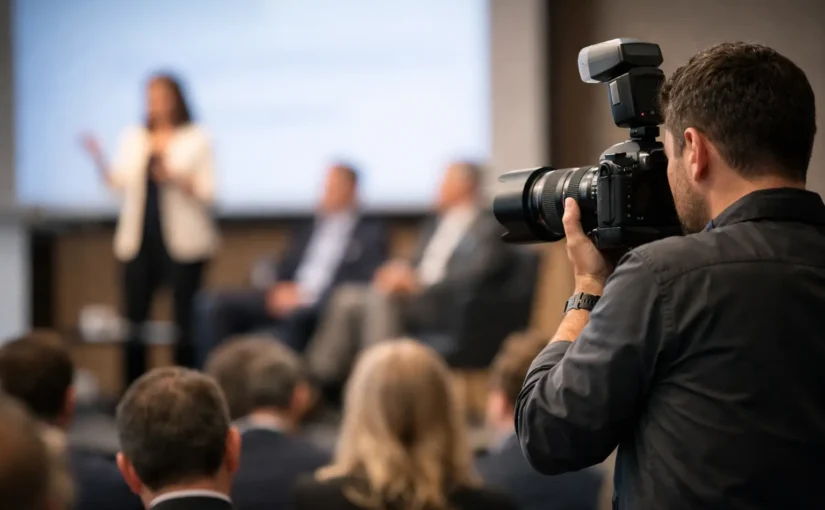
The keynote room is full, a speaker lands the point that gets everyone talking, and a room of peers leans in at once. That moment is gone in seconds, but the right conference photography services preserve its energy, professionalism, and purpose long after the final session ends.
For event planners, marketing teams, and organizations, conference images are more than event documentation. They support future promotions, strengthen brand credibility, recognize speakers and sponsors, and give attendees something tangible to share. Great coverage also makes people feel seen. It reflects the work, thought, and connection that went into bringing a meaningful event together.
What Conference Photography Should Accomplish
A strong conference gallery tells the story of the day without requiring anyone to have attended. It should show the scale of the venue, the focus of the programming, the people behind the event, and the real interactions happening between sessions.
That means moving beyond a collection of posed group photos or distant shots of a speaker onstage. The most useful galleries balance polished, professional images with candid moments: a thoughtful question from the audience, a warm welcome at registration, a lively sponsor conversation, or colleagues reconnecting over coffee.
The goal depends on the event. A leadership summit may need polished speaker portraits and brand-forward room images. A company retreat may place more value on team connection and celebration. A trade event may need sponsor visibility, attendee engagement, and clear documentation of activations. Good planning starts by identifying what success should look like for your organization after the event is over.
Start With the Images You Will Need Later
The best time to plan your photo coverage is before the agenda is finalized. Ask where the images will live after the conference: on a website, in a recap email, in press materials, on social media, in a sponsor report, or in next year’s event promotion.
This conversation shapes the coverage. If your marketing team needs vertical images for stories and reels, that should be part of the plan. If sponsors expect visibility, the photographer needs a clear list of booths, logos, representatives, and scheduled moments to capture. If speakers need professional photos for their own promotion, allow time for clean stage shots and a few thoughtful portraits.
A useful shot plan often includes four priorities:
- Establishing images of the venue, signage, registration, and branded details
- Speaker and panel coverage that captures both the presenter and audience response
- Candid networking, conversations, meals, and moments of genuine engagement
- Sponsor, partner, award, and group images that support reporting and recognition
The list should guide the day, not make the coverage feel stiff. Some of the strongest images happen in the unscripted spaces between agenda items. Leaving room to observe those moments helps the final gallery feel human rather than overly staged.
Why Experience Matters at a Live Event
Conference photography is a fast-moving assignment. The light may shift from a dim ballroom to a bright lobby. A speaker may change position constantly. Important moments can happen while the schedule is running ahead, behind, or in two places at once.
An experienced event photographer works calmly within that pace. They know when to move closer for a meaningful expression, when to stay discreet, and how to photograph a room without disrupting the attendee experience. That awareness matters just as much as polished images.
It also helps your team relax. Instead of trying to direct every photo while managing check-in, speakers, vendors, and timing, you can trust that key moments are being watched for and captured. The process should feel organized and easy, even when the event itself is full of moving pieces.
Conference Photography Services Need a Clear Run of Show
A detailed run of show is one of the most valuable tools you can provide. It does not need to be complicated. Include session times, room locations, names and titles of priority speakers, sponsor commitments, award presentations, group-photo opportunities, and any moments that cannot be repeated.
Share the names of one or two on-site decision-makers as well. During a conference, quick communication can make a major difference. If a VIP arrives early, an award presentation moves rooms, or a sponsor wants a photo with their team, the photographer should know exactly who can confirm the change.
Be realistic about transitions. If the agenda includes a large group portrait, schedule enough time for people to gather and receive direction. If executive portraits are important, give them a quiet, defined window rather than hoping they can happen during a packed networking break. A little structure protects the experience for everyone involved.
Plan for the venue you actually have
Every venue creates different photo opportunities and limitations. Ballrooms can be dramatic but often have low, colored lighting. Convention spaces may offer impressive scale but busy backgrounds. Outdoor receptions can be beautiful, though timing matters as daylight changes.
A venue walkthrough or a quick pre-event conversation helps identify the strongest areas for portraits, sponsor photos, and candid coverage. It can also reveal practical concerns such as restricted stage access, dark corners, crowded aisles, or screens that can affect how speakers are photographed.
The answer is not always more equipment or more staging. Sometimes it is simply choosing the right angle, positioning speakers thoughtfully, or creating a short portrait moment near the best available light.
Do Not Overlook the Attendee Experience
People want to feel comfortable when they are photographed, especially at professional events where images may be shared publicly. A welcoming approach goes a long way. The photographer should be present enough to capture authentic energy without making attendees feel watched or interrupted.
For networking-heavy events, this balance is especially important. A quick, friendly acknowledgment can put people at ease, while a confident photographer knows when to step back and let the conversation continue naturally. The result is imagery that feels alive, not forced.
If your event is designed to be interactive, a digital photo booth can add another layer of connection. It gives guests a reason to gather, laugh, and leave with a branded keepsake while professional event coverage captures the larger story. The two services serve different purposes and can work well together when the goal is both engagement and high-quality documentation.
Think Beyond the Final Session
Fast online delivery matters because the value of conference images is often highest immediately after the event. Your team may need a few standout images for same-day social posts, while attendees are still discussing the sessions and tagging new connections. A fuller gallery can support follow-up communications, internal recognition, recruitment, and future event marketing.
Before booking, ask how images will be delivered, when to expect highlights, and whether the gallery will be easy for your team to share and download. Clarify usage needs early, particularly if multiple departments, speakers, sponsors, or partners will use the images.
It also helps to think about longevity. The most effective conference galleries include wide images that show scale, close images that show emotion, and clean detail shots that reinforce the event brand. Together, those images give your organization a flexible visual library instead of a one-time recap.
Choosing the Right Photography Partner
When comparing conference photography services, look for more than a portfolio of attractive images. Ask whether the photographer understands the pace of a live agenda, can adapt to your venue, communicates clearly before the event, and has a process for organizing priorities.
Budget matters, and coverage should match the size and complexity of the event. A small executive workshop may only need a few focused hours. A multi-room conference with keynote speakers, sponsors, networking, and an evening reception may require broader coverage or additional support. The right fit is not necessarily the largest package. It is the one that protects the moments your event cannot afford to miss.
For organizations planning a conference in the Bay Area or Sacramento, Aaron Wilson Photography brings a guided, professional approach that keeps photo coverage clear, comfortable, and focused on the experience you worked hard to create. Check availability early, share the moments that matter most, and give your event the visual story it deserves.
The best conference photos do more than prove an event happened. They remind people why it mattered, who showed up, and what they want to be part of next.